 david24232525@gmail.com
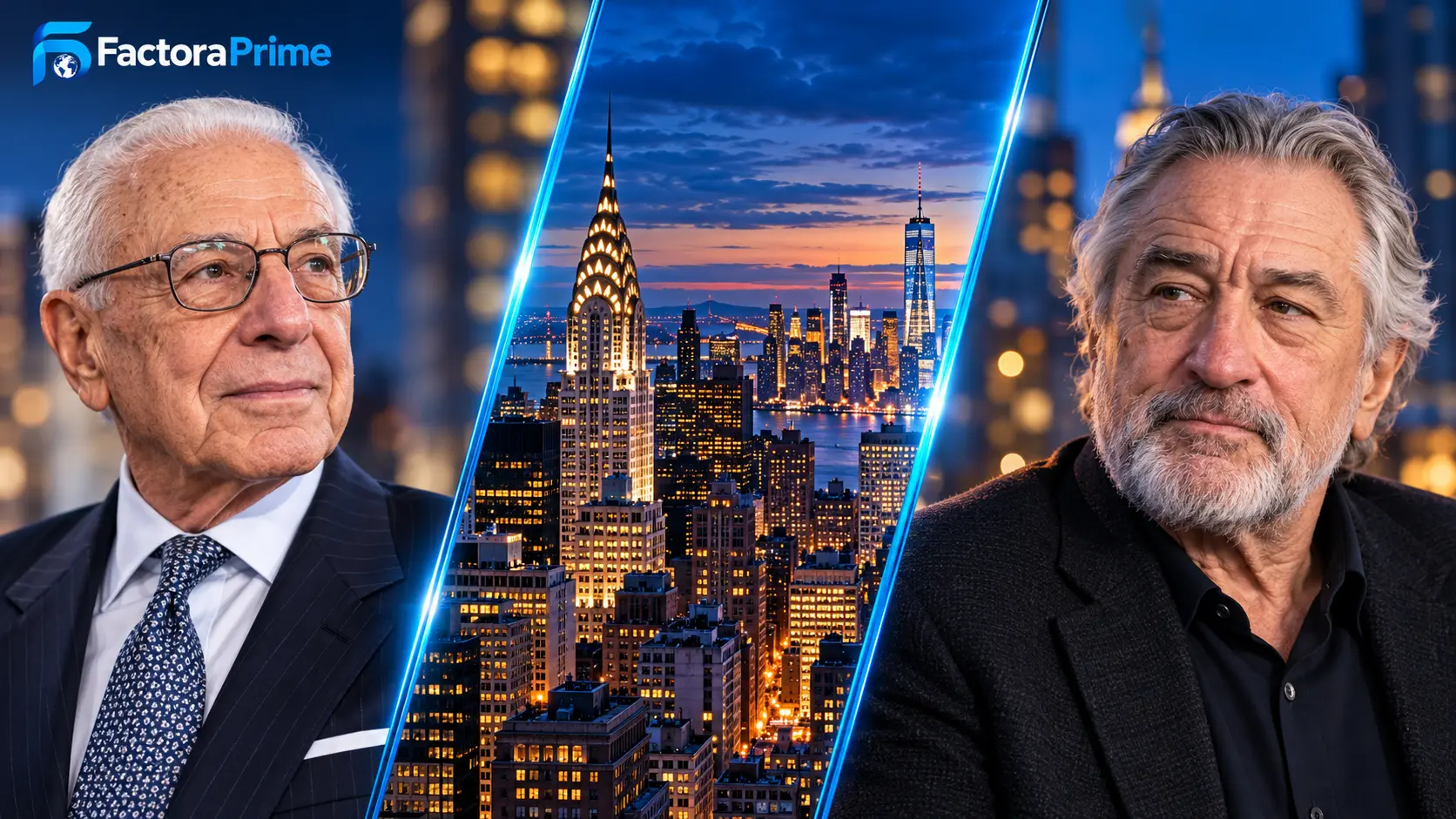
Jerry Speyer and Robert De Niro are not known to be business partners, and I found no credible reporting of a joint venture, a shared company or a personal feud between them. The link is civic rather than commercial. Speyer, the chairman of Tishman Speyer, helped shape the physical skyline of Manhattan. De Niro, the two-time Oscar winner, helped rebuild the neighbourhood of Tribeca after 9/11 through the Tribeca Festival. Both men also appear in public records connected to the National September 11 Memorial & Museum. So the honest answer to “are they connected?” is this: they belong to the same New York ecosystem, they have overlapped in the same cause, but they run entirely separate empires.
Why people search for these two names together
The pairing is a classic case of search intent outrunning the facts. Both men are New York royalty, both have Tribeca-adjacent associations, and both appear in features about the city’s most influential figures. Search engines therefore surface them side by side, and some low-quality websites then invent a relationship to fill the gap.
I think that is the wrong way to read it. The more useful question is not “did they work together?” but “what does each man represent, and where do their stories genuinely touch?” Answering that gives you something worth reading, and it avoids repeating the thin claims found on many pages ranking for this phrase.
Who is Jerry Speyer?
Jerry I. Speyer was born on 23 June 1940. According to the biographical notes published in Leaders magazine, he graduated from Columbia College in 1962 and from Columbia Business School in 1964. In 1978 he co-founded Tishman Speyer with his father-in-law, Robert Tishman, a founding step confirmed by company histories and by Wikipedia’s entry on Tishman.
The deals that defined his career
Reporting from Crain’s New York Business gives the most useful summary of his big moves:
- 1995: A consortium including Goldman Sachs, Gianni Agnelli and Stavros Niarchos outbid Sam Zell to buy Rockefeller Center out of bankruptcy for $1.2 billion. Crain’s links his friendship with David Rockefeller to opening that door.
- 1998: Speyer and a partner bought the Chrysler Building and two other properties in foreclosure for $220 million. Crain’s reports they nearly doubled their money after holding the building for about four years.
- 2005: He bought the MetLife Building.
- 2006: The Stuyvesant Town and Peter Cooper Village purchase, which Crain’s bluntly calls his “dud deal”.
Beyond property
Speyer is better known in establishment circles than in tabloids. Leaders lists him as chairman of the Museum of Modern Art, vice chair of New York-Presbyterian Hospital, a former chairman of the Federal Reserve Bank of New York’s board, and chairman emeritus of Columbia University’s trustees and of the Real Estate Board of New York. The same biographical note lists a place on the board of the National September 11 Memorial & Museum. In 2015 his son Rob became sole chief executive of Tishman Speyer, while Jerry remained chairman, as Crain’s and the Real Deal reported.
Who is Robert De Niro, beyond the films?
Most readers know the actor. The Academy of Motion Picture Arts and Sciences honoured him twice: Best Supporting Actor for The Godfather Part II (1974) and Best Actor for Raging Bull (1980), as recorded in his filmography. He also received the AFI Life Achievement Award in 2003 and the Kennedy Center Honors in 2009.
What gets less attention is the businessman. According to a New York Times report on the festival’s planning, he and Jane Rosenthal founded Tribeca Productions in 1988. AARP’s profile describes him establishing the Tribeca Film Center, a hub for film and television companies and the base for his own production company. He also built a hospitality portfolio in the area, including Tribeca Grill, Nobu and Locanda Verde, all named in DNAinfo’s coverage of his 9/11 Memorial fundraising.
The Tribeca Festival: his most important civic act
The festival was founded in 2002 by De Niro, Jane Rosenthal and Craig Hatkoff, in response to the September 11 attacks and the loss of vitality in Lower Manhattan. It opened on 8 May 2002 with About a Boy. ANI’s report on the documentary Tribeca 25 says the first edition featured 150 films chosen from more than 10,000 submissions and drew over 150,000 visitors. De Niro describes the founding team as having roughly four months, a volunteer army and no real blueprint.
The founders did not plan an annual event. As Rosenthal told the New York Daily News, as quoted by the 9/11 Memorial, they were “thinking short-term”. It became permanent regardless. The festival’s organisers have claimed large economic benefits, with figures of $660 million after a decade (cited by a Baruch College student publication quoting Tribeca) and $725 million (cited by CBS News). Treat those as organiser estimates rather than audited numbers, but the direction is clear: it helped bring people back.
Where their paths genuinely overlap
This is the part most articles skip. There are three documented overlaps, and they are worth separating from speculation.
1. The National September 11 Memorial & Museum
The 9/11 Memorial’s own communications describe De Niro and Rosenthal as longtime board members who co-chaired the “Signs of Support” fundraising campaign, which encouraged businesses to donate $100 or more and display a window sticker. Leaders magazine’s biographical notes for Speyer, in its 2012 and 2013 editions, list the same organisation among his board affiliations. I did not find evidence that they served on the board in exactly the same years, so I would not claim they sat in the same boardroom. What can be said safely is that both gave time and standing to the same project.
2. A shared stake in Lower Manhattan’s recovery
De Niro’s work was neighbourhood-level: a festival, restaurants and a film centre in Tribeca. Speyer’s was institution-level: boards, financing and real estate. They addressed different layers of the same problem. This is my own interpretation, not a quotation from either man, but I find it the most persuasive way to understand why the two names keep appearing together.
3. A parallel family-business story
An older RockRose feature on the children of New York’s real estate families, reprinted from a trade publication, discusses Rob Speyer and Raphael De Niro in the same piece. It describes Raphael as a broker at Prudential Douglas Elliman and notes he was working with his father on a Nobu hotel in Miami and on expanding the Greenwich Hotel brand. Because that piece dates from the post-2008 downturn, treat its details as historical. It does show that both families sit in the same New York property conversation, which is another reason the names get linked.
Comparison table: two careers, side by side
| Category | Jerry Speyer | Robert De Niro |
|---|---|---|
| Main identity | Real estate developer and civic leader | Actor, producer and entrepreneur |
| Core company | Tishman Speyer (founded 1978) | Tribeca Productions (founded 1988), Tribeca Enterprises |
| Signature New York projects | Rockefeller Center, Chrysler Building, MetLife Building | Tribeca Film Center, Tribeca Festival, Tribeca Grill, Nobu |
| Civic roles | MoMA chairman, ex-chair of the New York Fed’s board, Columbia trustee leadership | 9/11 Memorial board, Tribeca Festival co-founder |
| Public recognition | Forbes 400 listing, cited by Wikipedia | Two Oscars, AFI Life Achievement Award, Kennedy Center Honors |
| Next generation | Rob Speyer, CEO of Tishman Speyer since 2015 | Family members in hospitality and property |
| Documented joint venture | None found | None found |
What the “full guide” pages get wrong
At least one page ranking for this phrase correctly says the two men have no direct business collaboration, which matches my own findings. Where such pages fall short is depth. They stay at the level of “both are famous in New York” without naming a single transaction, board seat, date or published source. That is the gap this article is designed to fill.
My assessment, offered plainly as opinion: the best way to understand this pairing is as a case study in two ways of influencing a city. One man did it through capital and governance. The other did it through culture and visibility. A city needs both, and the post-9/11 recovery of Lower Manhattan is the clearest example of why.
Five myths worth correcting
Myth 1: They co-own a company. I found no evidence of this in Tishman Speyer’s corporate history or in De Niro’s company records as reported.
Myth 2: Tishman Speyer owns the Tribeca Festival. The festival is organised by Tribeca Enterprises, founded by De Niro, Rosenthal and Hatkoff.
Myth 3: De Niro is mainly an actor who dabbles in business. The Tribeca Film Center, restaurants and hotel projects suggest a serious, long-running second career.
Myth 4: Jerry Speyer still runs Tishman Speyer day to day. Rob Speyer has been sole CEO since 2015, with Jerry staying on as chairman.
Myth 5: Their link is a secret relationship. Nothing public supports that. The overlap is documented and ordinary: shared causes in a single city.
How to verify claims about public figures like these
If you write or research about either man, a few habits will protect your accuracy and your search credibility:
- Prefer primary organisations. Tishman Speyer’s own site, the 9/11 Memorial’s press releases and Tribeca’s official materials are better than aggregators.
- Use established newspapers and magazines. Crain’s New York Business, The New York Times, the Real Deal and CBS News have editorial standards that anonymous blogs lack.
- Check dates. Board seats and job titles change. A 2012 biography is not proof of a 2026 role.
- Use IMDb for film credits only. It is a sensible reference for roles and release details, but not for business claims.
- Separate fact from interpretation. Label your own reasoning as opinion, as I have done above.
Frequently asked questions
Do Jerry Speyer and Robert De Niro work together? No public record I found shows a joint business. Their overlap is a shared involvement with 9/11 Memorial work and a shared presence in New York’s civic life.
Is Robert De Niro involved with Tishman Speyer? I found no reporting that he owns, runs or invests through Tishman Speyer.
Who founded the Tribeca Festival? Robert De Niro, Jane Rosenthal and Craig Hatkoff, in 2002.
Who leads Tishman Speyer now? Rob Speyer, Jerry’s son, has been president and chief executive since 2015, with Jerry as chairman, per Crain’s and the Real Deal.
Why are the two names searched together? Because they are prominent in the same city, appear in the same civic stories and are sometimes grouped in lists of influential New Yorkers.
Final verdict
If you came here wanting a secret partnership, the evidence does not support one. If you wanted a clear understanding of how two very different New Yorkers helped shape the city, the story is richer than any rumour. Jerry Speyer built and financed some of Manhattan’s most recognisable buildings and sat on its most important boards. Robert De Niro used his fame to help a wounded neighbourhood recover. Their paths run alongside each other through the 9/11 Memorial and Lower Manhattan’s recovery, and that, rather than a joint business, is the real connection.
Read also: Sean Connolly and Ed Sheeran: Is There a Real Connection?