 david24232525@gmail.com
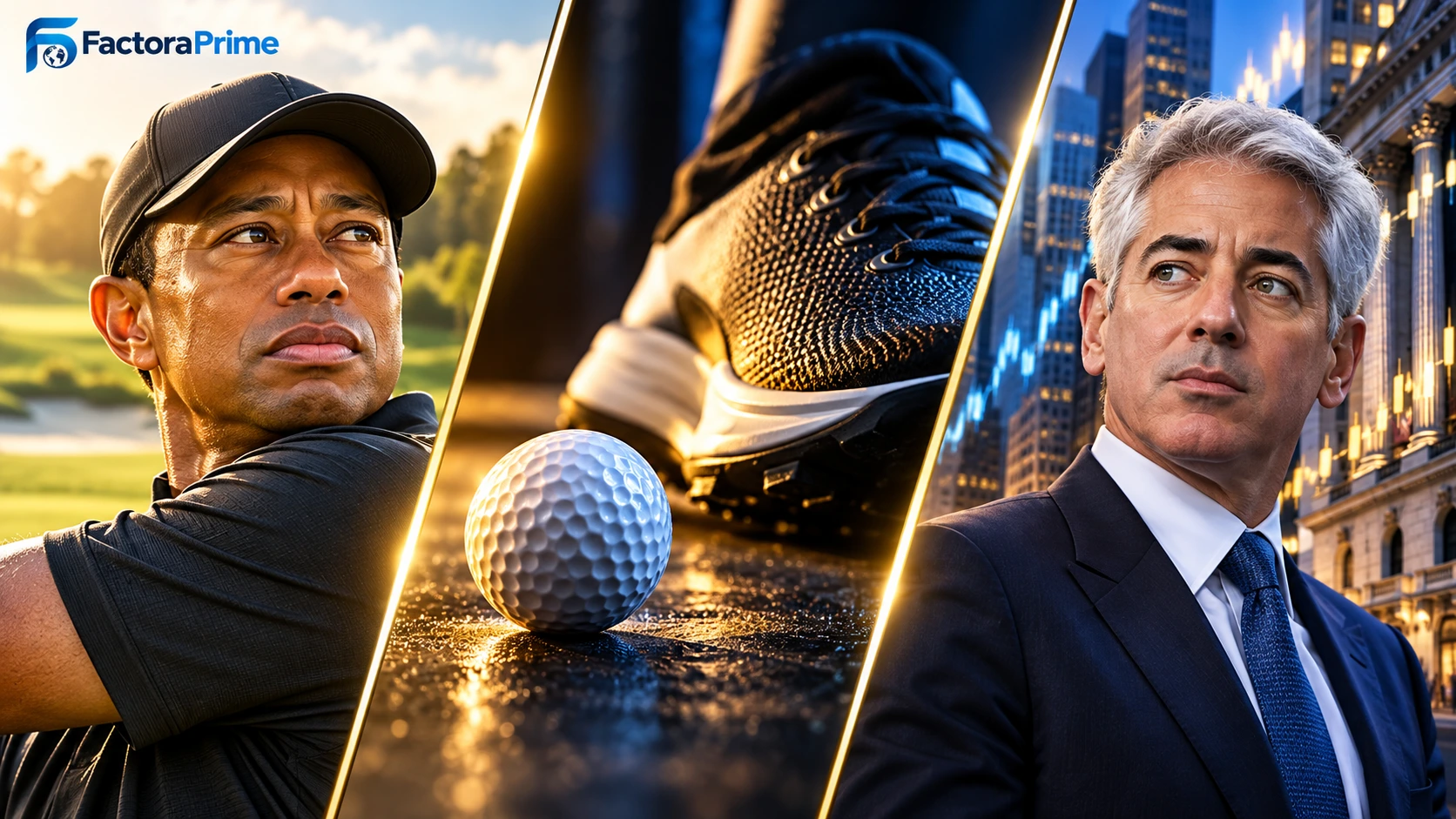
Tiger Woods and Bill Ackman are connected through Nike (NKE), a stock Ackman’s Pershing Square Capital Management invested in heavily beginning in mid-2024, largely because the company had lost the marketing magic embodied by iconic athletes like Woods. The connection is not a partnership or personal relationship, but rather a revealing case study in how the end of one era Woods’ 27-year Nike partnership created an investment thesis for one of Wall Street’s most closely watched activists.
The Unlikely Intersection of Sport and Finance
When Tiger Woods announced the end of his 27-year partnership with Nike in January 2024, the sports world mourned the close of the most commercially significant athlete-brand relationship in history. What few noticed at the time was that this breakup would become a central pillar in an investment thesis crafted by Bill Ackman, the billionaire founder of Pershing Square Capital Management.
The Tiger Woods and Bill Ackman connection is not about a meeting of minds or a shared business venture. It is about how the absence of one figure a generational athlete whose very presence sold products illuminated a vulnerability in a global brand that Ackman believed was fixable, and therefore investable. This is a story about the intersection of sports marketing and activist investing, and what happens when a company loses the athletes who made it culturally dominant.
Bill Ackman’s Nike Bet: A Deep Dive
The Timeline of Pershing Square’s Nike Position
Bill Ackman’s Pershing Square Capital Management first took a position in Nike in the fourth quarter of 2017, acquiring 5.84 million shares at approximately $62.55 per share. That initial investment was short-lived Pershing Square sold out entirely in the first quarter of 2018. However, the firm’s interest in Nike was far from over.
In the second quarter of 2024, Pershing Square re-entered Nike with a new purchase of approximately 3 million shares at an estimated average price of $75.37. The firm dramatically increased its stake in the third quarter of 2024, adding over 13 million shares at $88.40, bringing its total position to over 16 million shares. By the end of 2024, Pershing Square held 18.77 million shares of Nike, valued at approximately $1.4 billion at its peak.
The Strategy Shift: Converting to Call Options
Perhaps the most sophisticated aspect of Ackman’s Nike investment came in early 2025. Rather than maintaining a traditional equity position, Pershing Square converted its Nike holdings into deep-in-the-money call options with multi-year expirations. This maneuver served multiple purposes: it maintained exposure to Nike’s potential turnaround while freeing up capital for other investments, and it created leverage that could more than double returns if the thesis played out.
The conversion also had a side effect that confused many market observers. Because call options do not appear on quarterly 13F filings with the SEC, Nike appeared to vanish from Pershing Square’s public disclosures leading some to believe Ackman had abandoned the position when he had actually increased his exposure.
Why Nike? The Ackman Thesis
Ackman’s investment thesis for Nike rested on several interconnected premises. First, he viewed Nike as a dominant player in a highly consolidated industry with barriers to entry that protected its market position. Second, he recognized that Nike had made specific, correctable mistakes: a shift toward direct-to-consumer sales that alienated wholesale partners, a merchandising structure that prioritized categories over sports, and a failure to deliver the product innovation that had historically driven growth.
The third pillar of the thesis is where Tiger Woods becomes directly relevant. Brian Mulberry, a client portfolio manager at Zacks Investment Management, noted that Nike was “missing key brand ambassadors that were so critical to growth,” specifically citing Woods as an aging athlete whose deal was unlikely to be renewed, leaving Nike “with no real superstar from any sport to help engage with younger consumers”. The end of the Woods-Nike partnership was not merely a sentimental loss it was a strategic vulnerability that Ackman believed new management could address.
The Tiger Woods and Nike Era: What Was Actually Lost
A 27-Year Partnership That Defined an Industry
Tiger Woods signed with Nike in 1996 after his unprecedented third straight U.S. Amateur title, agreeing to a five-year deal worth $40 million at a time when such figures were shocking to the sports industry. His father, Earl Woods, famously dismissed the sum as “chump change” a prediction that proved remarkably accurate.
Over the subsequent decades, Woods’ deals with Nike grew exponentially: a reported $100 million renewal around 2000, an eight-year deal reported at $160 million in 2006, and a final deal signed in 2013 reportedly worth $200 million. More importantly, Woods became synonymous with Nike Golf. The “TW” brand became one of the most recognizable athlete-brand collaborations in sports, and moments like his 2005 Masters chip-in where the ball hung on the lip of the hole with the Nike swoosh in full view before dropping became iconic pieces of both golf and marketing history.
The Signs of Fracture
The end of the partnership did not come without warning. In 2016, Nike stopped selling golf clubs, bags, and balls, shifting its focus exclusively to footwear and apparel. Woods began using TaylorMade clubs and eventually switched to FootJoy shoes after his February 2021 car crash, citing comfort concerns related to his injuries. When pressed about his Nike deal in late 2023, Woods was evasive, saying only “I’m still wearing their product” and repeating the phrase when asked directly about the partnership’s status.
The formal end came in January 2024, with Woods posting a thank-you to Nike co-founder Phil Knight on social media and Nike responding with a tribute that read, in part: “Tiger, you challenged your competition, stereotypes, conventions, the old school way of thinking. You challenged the entire institution of golf. You challenged us. And most of all, yourself. And for that challenge we’re grateful”.
What Nike Lost
The departure of Woods was not merely a marketing loss. Professor Derdenger of Carnegie Mellon University noted that when Woods turned professional, Nike “didn’t have a strong prominent position in the golf industry” and struck gold by aligning with the upcoming star. Without Woods and Michael Jordan, Derdenger argued, “I don’t think Nike, it’s brand, would be where it is today”.
For Ackman’s investment thesis, the Woods departure symbolized a broader problem: Nike had lost its cultural anchor in golf. While the company still sponsors Scottie Scheffler, Rory McIlroy, and Nelly Korda, none possesses the transcendent cultural and commercial power that Woods brought to the brand. The question became whether Nike could rekindle that magic or whether the company’s best days of athlete-driven marketing were behind it.
Tiger Woods Today: A Different Kind of Empire
TGR Design: The Architect
While Ackman was analyzing Nike’s marketing weaknesses, Tiger Woods was quietly building a second act as a golf course architect. Through TGR Design, his firm has established itself as a significant player in luxury golf development, with projects spanning the United States, Mexico, and beyond.
The firm’s portfolio includes Bluejack Ranch in Aledo, Texas a 914-acre property where a par-72 championship layout spanning nearly 7,700 yards is scheduled to open in autumn 2026. The site features dramatic topography with rock outcroppings, mature oaks, and creeks running throughout a landscape the design team describes as reminiscent of Texas Hill Country.
In Mexico, TGR Design is creating the Legacy Course at Diamante Cabo San Lucas, the firm’s third project at the resort community following El Cardonal and the Oasis Short Course. The Legacy Course will feature five interconnected lakes with cascades and waterfalls, deep white-sand bunkers, and a landscaped man-made dune encircling the property for privacy. Membership is limited to 250 families, with initiation fees set at $300,000 and annual dues estimated at $60,000.
Woods’ most personally meaningful project may be Trout National – The Reserve in Vineland, New Jersey, a $100 million private club designed in collaboration with baseball superstar Mike Trout. Built on 280 acres of former sand mine property and farmland, the course holds deep significance for Trout, who grew up in the area. Woods described the experience of bringing the project to life as “incredibly rewarding,” while Trout called Woods the ideal partner to realize his vision.
The Business of Tiger Woods
Woods’ post-Nike career represents a deliberate pivot from athlete-endorser to owner-operator. Rather than simply lending his name to products, Woods has built businesses that leverage his expertise and personal brand in more sustainable ways. TGR Design, TGR Ventures, and his various golf course and hospitality projects suggest a strategic approach to legacy-building that prioritizes ownership and control over traditional sponsorship revenue.
This shift is significant for understanding the Ackman-Nike connection. The athlete who once embodied Nike’s golf ambitions has become a competitor of sorts not in apparel, but in the broader lifestyle and experience economy. Woods’ courses are luxury destinations; his brand now stands for exclusivity and craftsmanship rather than mass-market sportswear.
Bill Ackman’s Broader Investment Philosophy
To fully understand why Ackman found Nike compelling, it helps to understand his investment approach more broadly. Pershing Square runs a highly concentrated portfolio, typically holding only 8 to 12 positions at any given time. This concentration reflects Ackman’s conviction-driven style: he makes large bets on a small number of companies where he believes he has identified a significant mispricing.
Ackman’s philosophy combines value investing principles with activist engagement. He looks for companies with strong brands, durable competitive advantages, and correctable problems. When he sees a company that has stumbled whether through strategic missteps, management failures, or market misperceptions he sees opportunity.
Nike fit this profile almost perfectly. It possessed a globally recognized brand, dominant market share, and a clear set of self-inflicted wounds that new management could address. The company had admitted to mismanaging its direct-to-consumer strategy at the expense of wholesale relationships, prioritizing product categories over sports, and failing to deliver the innovation that had historically driven growth. These were fixable problems, not existential threats.
Ackman’s 2026 portfolio moves further illustrate his investment philosophy. That year, he exited positions in Alphabet, Universal Music Group, and Hertz Global, while adding Netflix, Visa, Mastercard, S&P Global, Intercontinental Exchange, and Alcon. He also launched Pershing Square USA, raising $5 billion and deploying 95% of the capital within months. Each of these decisions reflects his willingness to make bold, concentrated bets based on rigorous analysis of company-specific situations.
The Deeper Connection: What This Story Reveals
The Tiger Woods and Bill Ackman connection, at its core, is about the relationship between cultural capital and financial capital. Woods represented the pinnacle of athletic achievement and commercial appeal; his presence sold products and defined brands. When he left Nike, he took with him a form of intangible value that the company could not easily replace.
Ackman, as an investor, recognized that this loss was both a symptom and an opportunity. The symptom was Nike’s broader struggle to maintain cultural relevance in an increasingly fragmented sports marketing landscape. The opportunity was a brand with enduring strength trading at a valuation that reflected short-term pessimism rather than long-term potential.
This dynamic the interplay between cultural shifts and investment theses is increasingly central to how sophisticated investors evaluate consumer companies. In an era where athlete endorsements, social media presence, and cultural relevance can make or break brands, the departure of a figure like Tiger Woods is not merely a marketing event. It is a data point that signals deeper strategic challenges.
Ackman’s bet on Nike was, in part, a bet that the company could rebuild the kind of cultural capital that Woods once provided. New CEO Elliott Hill’s “Win Now” strategy focused on sports-first marketing, increased innovation, and repaired wholesale relationships represents an attempt to do exactly that. Whether Nike can recapture the magic of the Woods era remains an open question, but Ackman’s willingness to commit over $1 billion to the thesis suggests he sees a path forward.
Key Comparisons: Woods’ Nike Era vs. Ackman’s Investment Thesis
| Dimension | Tiger Woods Era (1996-2024) | Ackman’s Nike Thesis (2024-Present) |
|---|---|---|
| Core Asset | Woods’ athletic dominance and cultural transcendence | Nike’s brand equity and market position |
| Value Creation | Endorsement revenue, brand association, product sales | Turnaround execution, operational improvement, multiple expansion |
| Key Risk | Over-reliance on one athlete’s performance and image | Execution risk, competitive pressure, secular headwinds |
| Strategic Logic | Mass-market appeal through athletic excellence | Value investing with activist engagement |
| Time Horizon | 27-year partnership | Multi-year turnaround thesis |
Frequently Asked Questions
Are Tiger Woods and Bill Ackman friends or business partners?
No. There is no evidence of a personal relationship or direct business partnership between Tiger Woods and Bill Ackman. Their connection is indirect: Ackman’s investment in Nike coincided with and was influenced by the end of Woods’ long-standing sponsorship deal with the company.
Why did Bill Ackman invest in Nike?
Ackman saw Nike as a classic turnaround opportunity: a dominant brand with correctable strategic mistakes. He believed that new management could fix the company’s failed direct-to-consumer strategy, restore wholesale relationships, and reignite product innovation. The departure of Tiger Woods, while not the cause of Nike’s problems, symbolized the brand’s loss of cultural momentum a problem Ackman believed was fixable.
Did Tiger Woods’ Nike deal ending affect Nike’s stock?
The end of the Woods-Nike partnership was symbolic rather than financially material in itself. Nike had already reduced its golf division focus, exiting equipment manufacturing in 2016. However, the departure highlighted broader concerns about Nike’s marketing effectiveness and cultural relevance, which were relevant to the investment thesis.
What is Tiger Woods doing now instead of Nike?
Woods has focused on his golf course design firm, TGR Design, which has multiple luxury projects in development, including Bluejack Ranch in Texas, the Legacy Course at Diamante Cabo San Lucas in Mexico, and Trout National – The Reserve in New Jersey. He has also pursued other business ventures through TGR Ventures.
Is Bill Ackman still invested in Nike?
Pershing Square converted its Nike equity position into deep-in-the-money call options in early 2025. While this means Nike no longer appears in quarterly 13F filings, Ackman has retained exposure to the stock with leverage. The outcome of this investment remains tied to whether Nike’s turnaround materializes.
Conclusion: A Tale of Two Legacies
The Tiger Woods and Bill Ackman connection is not a story of collaboration, but one of convergence. Woods’ departure from Nike in 2024 marked the end of an era in sports marketing an era in which a single athlete could define a brand’s identity and drive its growth. Ackman’s investment in Nike, beginning months after that departure, represented a bet that the company could navigate the post-Woods landscape and rediscover the magic that made it dominant.
For Woods, the post-Nike chapter has been defined by ownership and design building courses that bear his name and reflect his vision, rather than wearing another company’s logo. For Ackman, the Nike investment is another chapter in a career defined by identifying value where the market sees only problems.
Whether Ackman’s thesis proves correct whether Nike can turn itself around without a figure of Woods’ magnitude remains to be seen. What is certain is that the intersection of these two figures, one athletic and one financial, reveals something important about how cultural capital and financial capital interact in the modern economy. When a legend leaves a brand, the question is never just about marketing. It is about whether the brand itself can become the legend.
For more stories and insights, visit Factora prime.blog