 david24232525@gmail.com
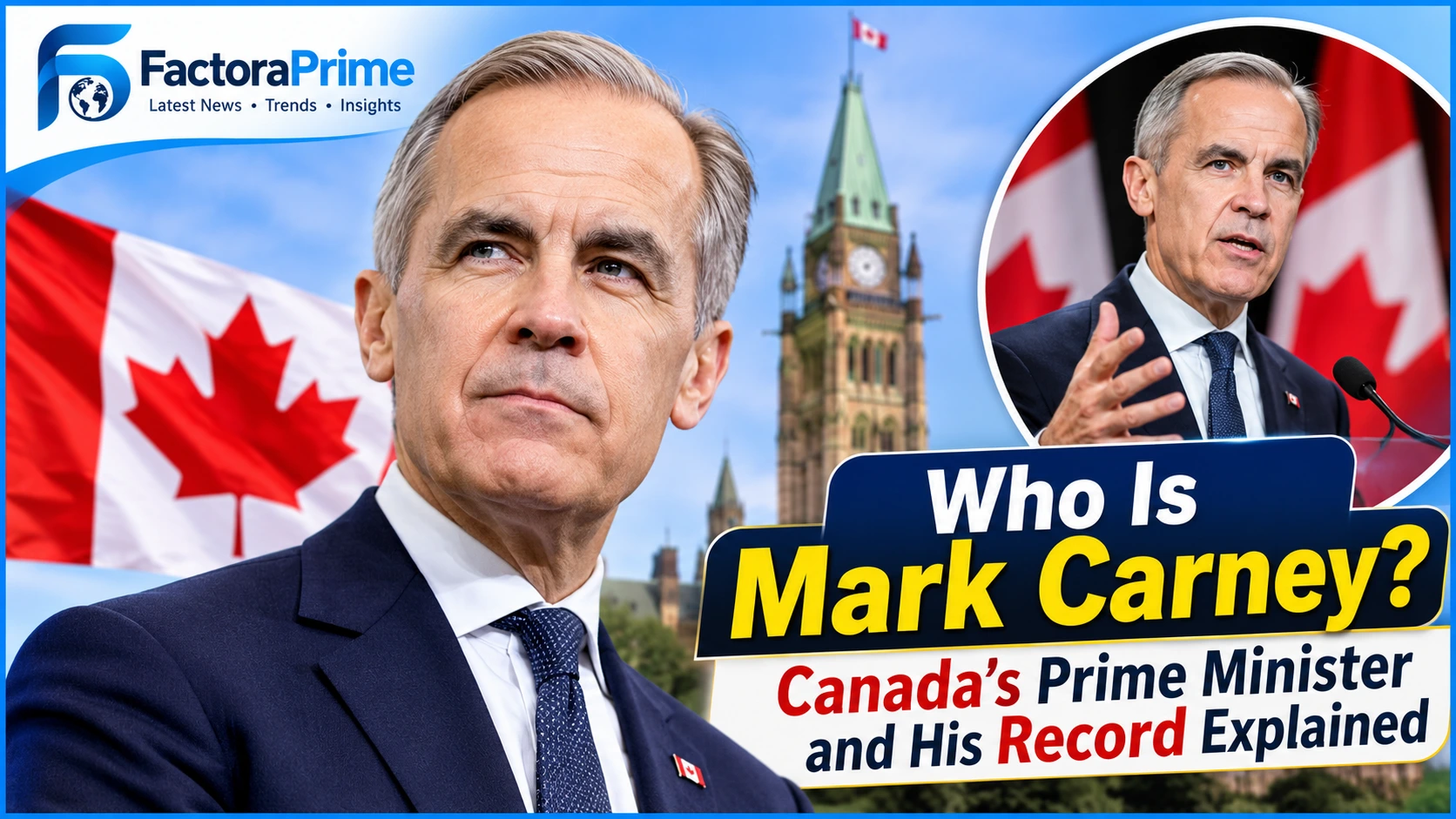
Mark Carney is Canada’s 24th prime minister, a Liberal leader who took office on March 14, 2025, after running the central banks of two countries. He led the Bank of Canada through the global financial crisis and the Bank of England through the Brexit era. Yet his most unusual career move came afterward: he became prime minister before ever winning an election. Six weeks later, he won a seat in Parliament as the Liberals secured a minority government.
That résumé makes him compelling but easy to overrate. Central bankers can steady markets; prime ministers must secure support for difficult decisions and deliver results people can feel. To understand Carney, it helps to separate what he achieved in finance from what he can actually control in government. Housing costs, U.S. trade tensions and climate policy will test that distinction.
Mark Carney at a glance
| Milestone | Details |
|---|---|
| Born | March 16, 1965, in Fort Smith, Northwest Territories; raised in Edmonton, Alberta |
| Education | Economics degree from Harvard; graduate degrees in economics from Oxford |
| Governor, Bank of Canada | 2008–2013 |
| Governor, Bank of England | 2013–2020 |
| Entered office as prime minister | March 14, 2025, after winning the Liberal leadership |
| First elected to Parliament | April 28, 2025, in Nepean, Ontario |
Carney’s route to office was not a conventional climb through local politics. After university, he spent more than a decade at Goldman Sachs. He later became a deputy governor of the Bank of Canada and held a senior position at Canada’s Department of Finance. From 2011 to 2018, he also chaired the Financial Stability Board, which coordinates international work on financial-system risks.
That experience helps explain his appeal: he has worked inside markets, public institutions and cross-border negotiations. It also explains the scrutiny. Experience with large financial firms is useful when seeking investment, but it does not remove the need for transparent decisions about former business interests. Carney and his wife, Diana Fox Carney, have four daughters.
The 2008 crisis: what Carney did and did not do
Carney became Bank of Canada governor in February 2008, as a financial crisis was spreading across the world. By April 2009, the bank had lowered its target overnight interest rate to 0.25%. It also made a conditional commitment to keep rates low into 2010, provided the inflation outlook allowed it.
That commitment mattered because borrowing decisions depend partly on expectations. If households and businesses believe rates will stay low, they may be more willing to borrow and invest. Economists call this forward guidance: using clear communication about possible future policy to strengthen the effect of today’s decision.
His record should not be reduced to “Carney saved Canada’s banks.” Canada’s major banks weathered the crisis better than many overseas counterparts, but banking safeguards, supervision, business practices and other public decisions all mattered. Canadians still experienced a recession. Nor did the governor personally make every interest-rate decision; central-bank policy is an institutional process.
The stronger, better-supported assessment is that Carney helped explain and manage an extraordinary threat when confidence was scarce. That is valuable experience for a prime minister facing uncertainty. It is not, by itself, a plan for building homes or lowering grocery bills. The Bank of Canada’s biography documents his career, while its monetary-policy materials explain the bank’s role.
The Bank of England years: Brexit and the limits of a forecast
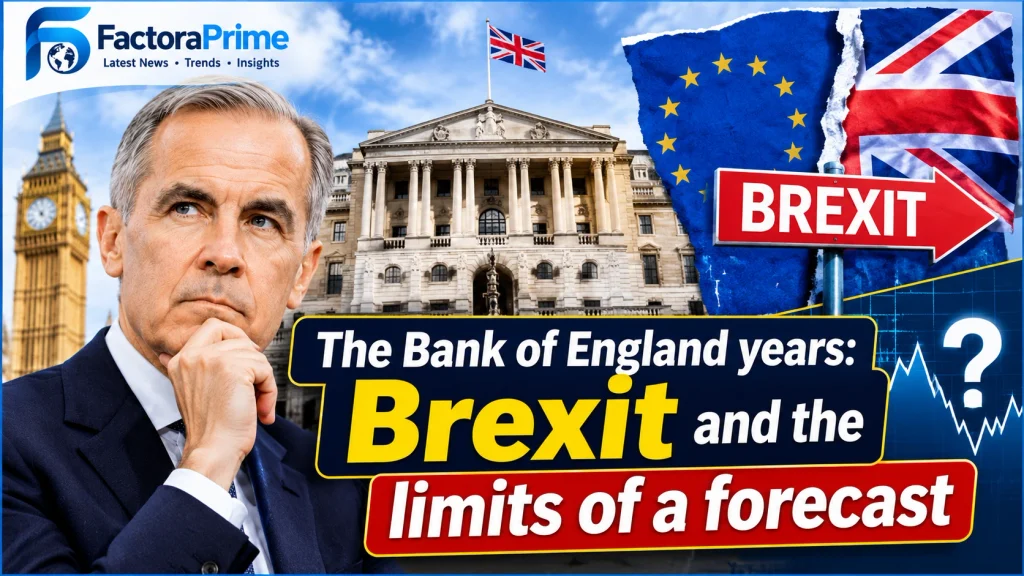
In 2013, Carney became governor of the Bank of England, making him the first person to lead both the Canadian and British central banks. His term ended in March 2020.
Brexit made that job unusually contentious. Before the United Kingdom’s 2016 referendum, the bank warned about potential economic and financial risks from leaving the European Union. After the vote, its Monetary Policy Committee cut Bank Rate from 0.5% to 0.25% and announced further stimulus, including asset purchases. Those decisions aimed to cushion a shock; they could not reverse the referendum or settle the country’s long-term trade arrangements.
The episode exposes a tension that follows Carney into politics. Critics argued that a central-bank governor’s public warnings risked sounding political. Defenders argued that explaining credible risks was part of the bank’s responsibility. Both concerns deserve attention: institutions should speak plainly about threats without presenting uncertain forecasts as guaranteed outcomes.
It is also misleading to describe every Bank of England decision as Carney’s alone. The Monetary Policy Committee made rate decisions collectively. And easier money has trade-offs: it can support jobs and borrowing while also affecting savers and asset prices. The bank’s monetary-policy records provide a firmer account of those choices than retrospective slogans.
Climate finance: ambition meets accountability
Carney’s work after central banking brought climate change to the center of his public profile. Named a United Nations special envoy on climate action and finance in 2019, he helped promote efforts to direct private investment toward a lower-emissions economy. He was associated with the launch of the Glasgow Financial Alliance for Net Zero in 2021 and held a senior role at Brookfield Asset Management. His 2021 book, Value(s), argues that markets should serve broader social priorities, not just short-term prices.
There is a sound financial question behind that work: climate-related damage and the transition away from high-emissions activity can create risks for businesses and investors. But a net-zero pledge by a financial institution is not the same as a measurable fall in emissions. Voluntary alliances should be judged by financing decisions and real-world outcomes, not membership totals.
His private-sector background warrants the same disciplined approach. Former corporate ties justify questions about disclosure and potential conflicts; they do not, without evidence, establish misconduct. The appropriate place to check formal requirements and public records is Canada’s Conflict of Interest and Ethics Commissioner.
How he became prime minister without first being an MP
After Justin Trudeau announced in January 2025 that he would step down as Liberal leader, Carney won the party’s leadership contest on March 9. He was sworn in as prime minister five days later.
That sequence can seem strange if one assumes Canadians directly elect a prime minister. They do not. Canadians elect members of Parliament; under Canada’s parliamentary system, the governor general appoints the person positioned to command the confidence of the House of Commons. A prime minister does not have to hold a Commons seat on the day of appointment.
Carney was the first Canadian prime minister to take office without previously holding elected office. The distinction did not last long as a matter of electoral experience: in the April 28, 2025, federal election, he won Nepean, Ontario. The Liberals won enough seats to form a minority government, not a majority. That means maintaining the House’s confidence matters to his ability to govern.
The distinction between the leadership contest and the general election is important. Liberal members chose their leader; voters then chose their local MPs. Readers can check the election record through Elections Canada and parliamentary membership through the House of Commons.
Four tests that matter more than his résumé
1. Can more Canadians afford a home?
Carney understands financing, but a cheaper loan cannot create a house that zoning rules do not permit or construction workers cannot build. Federal land, infrastructure funding, and financing can help. Provinces and municipalities, however, have substantial influence over land use and approvals.
The meaningful measure is not the number of housing announcements. It is whether more homes are completed where people need them, and whether rents and purchase costs become manageable relative to incomes. Population growth, construction capacity and borrowing costs also affect the result. That makes cooperation across governments essential and simple claims of sole credit or blame suspect.
2. Can Canada reduce its trade vulnerability?
The United States takes the largest share of Canadian merchandise exports. A Canadian prime minister cannot dictate U.S. tariff policy, but can negotiate, respond to trade disruptions, improve infrastructure and work to reduce barriers between Canadian provinces.
Diversifying exports is a sensible goal, though it cannot happen overnight. Auto manufacturing and energy, for example, rely on established cross-border relationships. The practical test is whether firms gain more dependable market access and make lasting investments, not whether a government delivers a forceful speech.
3. Will living standards improve, not just inflation statistics?
Under Carney, the federal government set the consumer fuel charge to zero effective April 1, 2025. That did not abolish every carbon-pricing system in Canada: industrial pricing is a separate policy. Any assessment of household savings should consider rebates as well as prices at the pump. The Canada Revenue Agency’s fuel-charge guidance is a useful starting point for the distinction.
A prime minister can propose taxes, spending and competition measures. He cannot simply order the Bank of Canada to cut interest rates. The bank makes routine monetary-policy decisions independently; fixed mortgage rates also respond to bond markets. For households, the fuller question is whether after-tax income is rising fast enough to cover housing, food, energy and debt costs.
4. Can climate policy deliver affordable, verifiable results?
Ending the consumer fuel charge does not answer what Canada should do about industrial emissions. Nor does a finance-sector pledge show that a factory has cut pollution. A workable strategy needs investment, reliable energy, credible rules and public evidence of emissions reductions.
Speed matters when building infrastructure, but so do costs, environmental review and Indigenous rights. Carney’s challenge is to explain those trade-offs openly rather than suggesting that every project will be fast, inexpensive and universally supported.
A fair scorecard for his government
No prime minister controls global prices, U.S. politics or every provincial decision. Still, Canadians can judge whether government choices improve outcomes over time:
| Issue | More useful evidence | Less useful on its own |
|---|---|---|
| Housing | Completed homes and rents relative to incomes | Funding or construction-start announcements |
| Trade | Market access, exports and sustained business investment | Diplomatic statements |
| Living standards | Inflation-adjusted income alongside major household costs | Headline inflation alone |
| Climate | Measured emissions and reliable, affordable energy | The number of net-zero pledges |
For housing, consult Canada Mortgage and Housing Corporation; for incomes, prices and trade, use Statistics Canada. Emissions data take time to publish, so climate claims require patience as well as scrutiny.
My assessment: credibility is an asset, not an outcome
Carney’s clearest strength is experience making decisions under uncertainty and persuading powerful institutions to act. His greatest risk is treating financial credibility as a shortcut to results. Investment can help build housing, but cannot grant a local permit. Lower rates can support an economy, but cannot secure a trade agreement. Climate finance can fund change, but cannot substitute for verified emissions cuts.
The fairest verdict is neither that an impressive résumé guarantees success nor that a former banker cannot serve the public. Judge whether he can connect federal resources with provincial cooperation, private investment, and clear safeguards and explain who bears the costs when goals conflict. Stable markets matter. Homes people can afford, dependable work and accountable decisions matter more.
Frequently asked questions
Was Mark Carney elected before becoming prime minister?
No. He took office in March 2025 without having held elected office. He subsequently won the Nepean seat in the April 2025 federal election.
Does he set Canada’s interest rates?
No. The Bank of Canada makes routine interest-rate decisions independently. Government policy can influence economic conditions, but the prime minister does not personally choose the policy rate.
Did he end carbon pricing in Canada?
No. The federal consumer fuel charge was set to zero effective April 1, 2025. Industrial carbon-pricing systems are distinct; saying that all carbon pricing ended would be inaccurate.