 david24232525@gmail.com
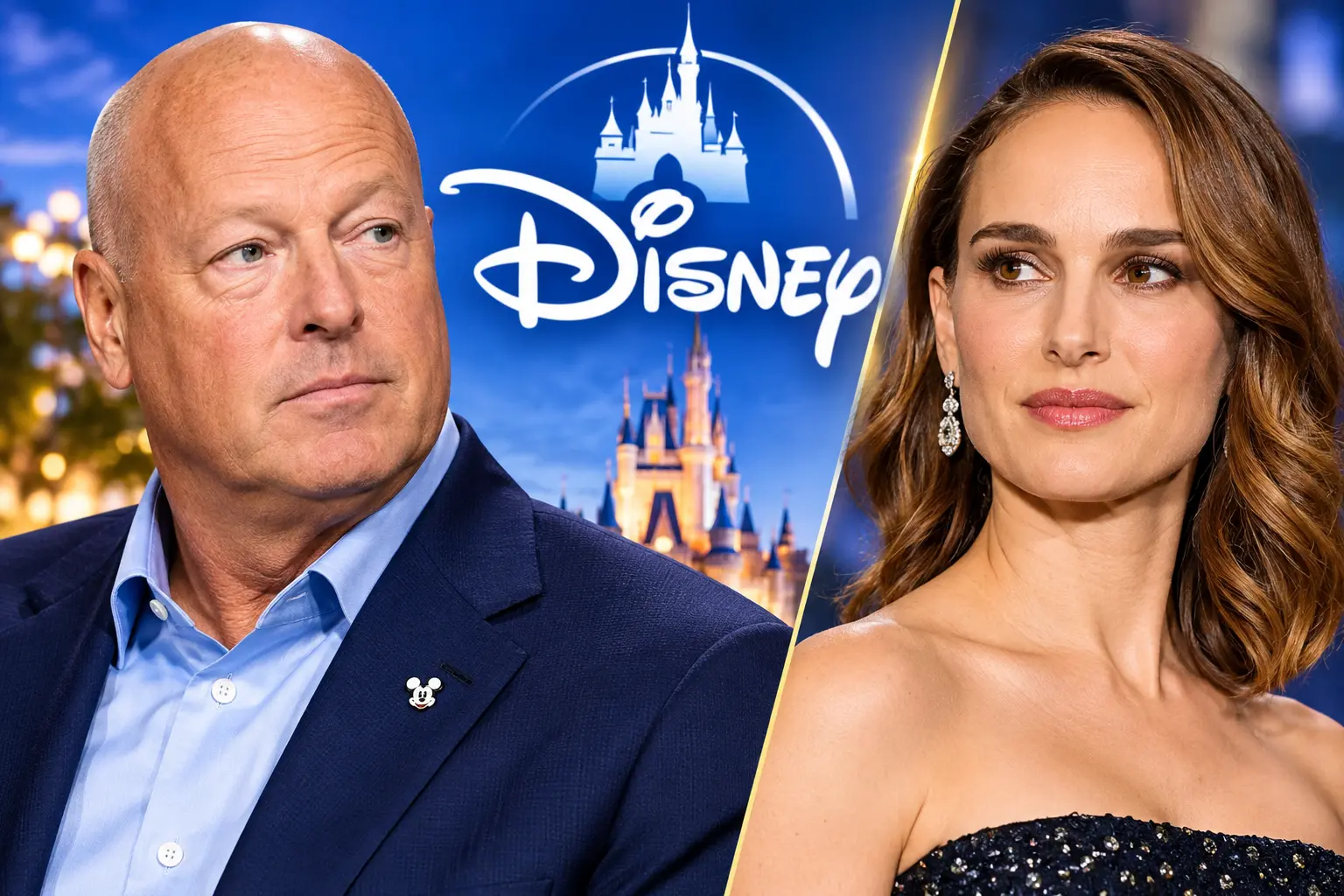
Bob Chapek and Natalie Portman have never had a personal relationship or a public feud. Their connection is strictly corporate and creative, rooted in the turbulent period between February 2020 and November 2022 when Chapek served as Chief Executive Officer of The Walt Disney Company. During those 33 months, Portman headlined two major Disney-backed releases, Disney Nature’s streaming documentary Dolphin Reef (2020) and Marvel Studios’ blockbuster Thor: Love and Thunder (2022), while also starring in franchises like Star Wars that formed the financial backbone of Chapek’s corporate strategy.
If you have seen their names paired in search trends, you are witnessing a collision between two very different sides of modern Hollywood. On one side stands a spreadsheet-driven executive who reshaped Disney around streaming subscribers; on the other stands an Academy Award-winning actress whose return to the Marvel Cinematic Universe unfolded right in the middle of Disney’s biggest identity crisis.
Clearing Up the Rumors: Why Are Bob Chapek and Natalie Portman Searched Together?
Online search curiosity often connects high-profile figures even when they operate in entirely separate lanes. In the case of Bob Chapek and Natalie Portman, there is no hidden tabloid scandal, joint business venture, or public war of words. Instead, their names converge because of how corporate leadership at The Walt Disney Company directly affects A-list talent.
According to official Walt Disney Company corporate filings and press archives, Bob Chapek rose through Disney’s consumer products, home entertainment, and theme parks divisions before succeeding Bob Iger as CEO on February 25, 2020. Almost overnight, Chapek inherited oversight of Hollywood’s most valuable intellectual property catalog, including Marvel Studios, Lucasfilm, Pixar, and the newly acquired 20th Century Studios (formerly 21st Century Fox).
Remarkably, Natalie Portman’s filmography spans nearly every corner of that empire:
- Lucasfilm (Star Wars): Portman portrayed Padmé Amidala across George Lucas’s prequel trilogy (The Phantom Menace, Attack of the Clones, and Revenge of the Sith), a franchise Disney purchased for $4.05 billion in 2012.
- Searchlight Pictures (20th Century Studios): Portman won the Academy Award for Best Actress for Black Swan (2010) and earned another Oscar nomination for Jackie (2016), released by Fox Searchlight, which became a Disney-owned subsidiary in March 2019.
- Marvel Studios & Disney Nature: As listed on IMDb and official Disney+ press records, Portman narrated Dolphin Reef (2020), voiced Jane Foster in Marvel’s What If…? (2021), and co-starred as Jane Foster / Mighty Thor in Thor: Love and Thunder (2022).
When audiences critique how Thor: Love and Thunder was marketed, shortened in theaters, or pushed onto Disney+, they are inevitably examining the intersection of Chapek’s executive playbook and Portman’s marquee star power.
From Dolphin Reef to Disney+: Portman’s Pandemic Streaming Debut Under Chapek
Just weeks after Bob Chapek took the helm at Disney in early 2020, the COVID-19 pandemic forced movie theaters around the world to shut their doors. Theme parks closed, cruise ships docked, and Hollywood’s traditional box office engine ground to a halt.
In response, Chapek leaned heavily into Disney+, which had launched only a few months earlier in November 2019. One of the earliest high-profile celebrity projects deployed to keep families subscribed during global lockdowns featured Natalie Portman.
On April 3, 2020, Disney Nature released Dolphin Reef exclusively on Disney+ in the United States, accompanied by Elephant (narrated by Meghan, Duchess of Sussex). Portman lent her voice to Dolphin Reef, guiding viewers through the story of Echo, a young Pacific bottlenose dolphin learning to survive in a coral reef ecosystem.
While documentary narration rarely dominates entertainment headlines, the timing was strategically significant for Chapek’s new administration:
- Prestige Without Theatrical Risk: With cinemas shuttered, Disney needed recognizable Oscar-winning voices to signal that Disney+ offered theatrical-caliber family entertainment at home.
- Earth Month Subscriber Retention: Positioning Portman’s narration as an April tentpole gave Disney+ a fresh marketing hook ahead of Earth Day without spending $200 million on a blockbuster production.
- A Blueprint for Centralization: The seamless pivot of studio titles toward direct-to-consumer streaming encouraged Chapek to go much further later that year.
In October 2020, Chapek announced a sweeping reorganization that created the Disney Media and Entertainment Distribution (DMED) division, led by his longtime lieutenant Kareem Daniel. As widely reported by The Wall Street Journal, The New York Times, and The Hollywood Reporter, DMED stripped creative studio chiefs of authority over how, when, and where films were released, placing profit-and-loss control into the hands of distribution executives. That structural shift would soon define the release of Portman’s biggest project of the decade.
Thor: Love and Thunder and the Chapek Era of Marvel Strategy
Natalie Portman’s journey back to the Marvel Cinematic Universe was years in the making. After starring in Thor (2011) and Thor: The Dark World (2013), Portman stepped away from the franchise, sitting out 2017’s critically acclaimed Thor: Ragnarok (her brief presence in 2019’s Avengers: Endgame relied on unused archival footage paired with newly recorded voiceover).
In July 2019, seven months before Chapek became CEO, Marvel Studios President Kevin Feige brought Portman onto the San Diego Comic-Con stage to thunderous applause, holding Mjolnir to announce Thor: Love and Thunder. Directed by Taika Waititi, the film promised to adapt Jason Aaron’s beloved comic run in which Jane Foster becomes the Mighty Thor while battling terminal cancer.
However, by the time Thor: Love and Thunder filmed in Australia in 2021 and arrived in theaters on July 8, 2022, Disney was a very different company under Chapek’s leadership.
Box Office Triumph Meets Critical Fatigue
Per Box Office Mojo and IMDb data, Thor: Love and Thunder earned $760.9 million worldwide on a reported production budget of roughly $250 million. By standard Hollywood metrics, it was a commercial hit outgrossing both Thor ($449.3 million) and Thor: The Dark World ($644.8 million). Yet it fell short of Thor: Ragnarok ($855.3 million) and received notably mixed reviews from critics and longtime Marvel fans, who felt the film’s comedic excesses undercut the emotional gravity of Portman’s cancer storyline.
The 62-Day Theatrical Window
More telling than the film’s tone was how Chapek’s Disney handled its distribution. Under DMED’s streaming-first mandate, Thor: Love and Thunder remained exclusive to movie theaters for only 62 days before debuting on Disney+ on September 8, 2022, timed specifically to boost promotional hype for “Disney+ Day.”
Industry analysts and theater owners viewed that compressed window as a double-edged sword. While it delivered a rapid spike in streaming viewership for Chapek’s quarterly investor pitch, it also trained casual audiences to wait two months rather than buy cinema tickets. In an era where Marvel movies had routinely crossed $1 billion, Love and Thunder became a case study in how aggressive streaming timelines can clip a blockbuster’s long-term box office legs.
Timeline Comparison: Bob Chapek’s Tenure vs. Natalie Portman’s Disney-Era Milestones
To understand how corporate decisions and creative milestones overlapped, the table below maps Chapek’s major executive moves alongside Portman’s Disney-affiliated releases.
| Date | Bob Chapek / Disney Corporate Milestone | Natalie Portman Career / Disney Milestone | Industry & Strategic Significance |
|---|---|---|---|
| July 2019 | Chapek serves as Chairman of Disney Parks; Bob Iger is CEO. | Portman announced at SDCC as Mighty Thor in Thor: Love and Thunder. | Marvel secures a major star return during peak pre-pandemic MCU confidence. |
| Feb 25, 2020 | Chapek named CEO of The Walt Disney Company. | Portman completes voice work for DisneyNature’s Dolphin Reef. | Leadership transition coincides with the onset of the global COVID-19 crisis. |
| April 3, 2020 | Disney pivots hard toward Disney+ amid theater closures. | Dolphin Reef premieres exclusively on Disney+ in the U.S. | Star-narrated documentaries help anchor early Disney+ family retention. |
| Oct 2020 | Chapek forms DMED, centralizing distribution away from studio heads. | Pre-production ramps up for Thor: Love and Thunder. | Corporate distribution goals begin overriding traditional studio autonomy. |
| July–Sept 2021 | Scarlett Johansson sues Disney over Black Widow streaming release; later settles. | Portman voices Jane Foster in Disney+ animated series What If…? (Sept 2021). | Talent contracts across Marvel undergo intense renegotiation and scrutiny. |
| July 8, 2022 | Chapek faces internal turmoil over Florida politics and streaming losses. | Thor: Love and Thunder opens in theaters, earning $760.9M globally. | Film succeeds financially, though mixed reviews fuel debate over MCU pacing. |
| Sept 8, 2022 | Disney+ Day showcases rapid blockbuster-to-streaming pipelines. | Thor: Love and Thunder hits Disney+ just 62 days after theatrical debut. | Highlights Chapek’s commitment to short theatrical windows for subscriber KPIs. |
| Nov 20, 2022 | Disney Board ousts Chapek; Bob Iger returns as CEO and dismantles DMED. | Portman shifts focus to prestige indie projects (May December). | Signals Disney’s retreat from Chapek’s centralized corporate model. |
Talent vs. Corporate Suits: Why Chapek’s Style Clashed with Hollywood Star Power
To grasp why the phrase Bob Chapek and Natalie Portman carries symbolic weight in entertainment journalism, you have to look at how differently Bob Chapek treated A-list actors compared to his predecessor, Bob Iger.
That cultural disconnect exploded into public view in July 2021, when Black Widow star Scarlett Johansson filed a breach-of-contract lawsuit against Disney in Los Angeles Superior Court. Johansson alleged that releasing Black Widow simultaneously on Disney+ Premier Access cost her tens of millions of dollars in box office bonuses. As The New York Times and Variety documented, Disney’s initial corporate response publicly called the suit “sad and distressing” and disclosed Johansson’s $20 million upfront paycheck to talent agencies across Hollywood.
Although Disney settled with Johansson in September 2021, the episode cast a long shadow over every subsequent Marvel release under Chapek’s watch, including Thor: Love and Thunder.
How Portman Navigated the Storm
Unlike Johansson, Natalie Portman never had a public dispute with Chapek’s executive team. By the time Thor: Love and Thunder arrived in summer 2022, Disney had quietly adjusted backend compensation agreements for major stars and committed to an exclusive theatrical launch, avoiding the day-and-date streaming model that triggered the Black Widow backlash.
During the 2022 press tour, in interviews with Variety, Vanity Fair, and The Hollywood Reporter, Portman kept her focus strictly on the craft: the ten months of weight training she undertook to portray Mighty Thor, her collaborative dynamic with Chris Hemsworth and Tessa Thompson, and her respect for Taika Waititi’s improvisation-heavy set. Even as industry observers scrutinized the film’s brisk 119-minute runtime and heavily trimmed scenes (with co-star Christian Bale and Waititi acknowledging substantial cut material), Portman remained a consummate professional who avoided corporate finger-pointing.
Still, the contrast was unmistakable. While Portman poured intense physical and emotional preparation into reviving a beloved character, Chapek’s corporate regime was increasingly viewed by insiders as treating Marvel films less like singular cinematic events and more like content fuel for quarterly streaming metrics.
Cultural Politics, Global Censorship, and Disney’s 2022 Reckoning
In 2022, Disney’s corporate reputation faced unprecedented turbulence on the cultural front, another arena where Chapek’s instincts clashed with the progressive sensibilities of Disney’s creative talent.
In March 2022, Chapek drew intense criticism from Disney employees, LGBTQ+ advocates, and Hollywood creatives reported extensively by The New York Times and Deadline for initially declining to publicly oppose Florida’s Parental Rights in Education bill (widely dubbed the “Don’t Say Gay” bill). When Chapek later reversed course and spoke out against the law, he alienated conservative lawmakers as well, triggering a bitter political battle with Florida Governor Ron DeSantis over Disney’s Reedy Creek special tax district.
Interestingly, while Chapek struggled with domestic political messaging, Disney’s film division under his oversight did hold the line on international censorship during the release of Thor: Love and Thunder.
Because the film included LGBTQ+ character references specifically involving Tessa Thompson’s Valkyrie and Korg, several Middle Eastern countries, including Saudi Arabia, Kuwait, and Malaysia, banned or declined to screen Thor: Love and Thunder after Disney refused to edit out those scenes. That decision aligned with Disney’s refusal to censor Eternals (2021), Doctor Strange in the Multiverse of Madness (2022), and Lightyear (2022).
For an outspoken, socially conscious performer like Portman who has long championed gender equity in Hollywood, famously wearing a cape embroidered with the names of snubbed female directors to the 2020 Oscars, standing behind an inclusive blockbuster mattered. Yet the broader chaos surrounding Chapek’s leadership overshadowed the summer of 2022, turning what should have been a celebratory return for one of cinema’s most respected actresses into just another chapter of Disney’s corporate soap opera.
Editorial Analysis: What the Chapek-Portman Era Teaches Us About Modern Disney
Looking back with the clarity of hindsight, the overlap between Bob Chapek and Natalie Portman exposes the central flaw of modern studio consolidation: you cannot optimize art solely with a distribution spreadsheet.
In my view, Bob Chapek was never malicious toward Hollywood talent, nor was he uniquely incompetent; rather, he was the wrong executive for the moment. Promoting a consumer-products and parks operator to run a creative empire during an existential pandemic forced Disney into a defensive, metric-obsessed crouch. When Wall Street demanded Netflix-style subscriber growth in 2020 and 2021, Chapek delivered by rushing films like Thor: Love and Thunder onto Disney+ in 62 days and sidelining studio executives through DMED.
The hidden cost of that approach was prestige. Natalie Portman didn’t return to Marvel after a nine-year absence just to be another thumbnail on a streaming homepage. Actors of her caliber come back for cultural moments films that linger in theaters, spark watercooler debates, and reward emotional weight over assembly-line pacing. When corporate priorities encourage shorter theatrical windows, rapid turnaround schedules, and content saturation, even an Oscar winner giving her all in a superhero suit can feel slightly underserved by the machine around her.
Notably, Disney’s board seemed to reach the exact same conclusion. On November 20, 2022, barely two months after Thor: Love and Thunder landed on Disney, the board abruptly fired Chapek after steep streaming losses shook Wall Street’s confidence, bringing Bob Iger back to restore creative authority. Within days, Iger dismantled DMED, Kareem Daniel exited the company, and Disney began lengthening theatrical windows again.
In the end, Chapek’s era lasted less than three years, while Portman’s characters Jane Foster and Padmé Amidala remain permanent pillars of Disney’s pop-culture mythology. That simple fact tells you everything about where Hollywood’s real long-term value resides.
Frequently Asked Questions (FAQ)
Did Bob Chapek and Natalie Portman ever work together directly?
Not directly on a personal level. While Bob Chapek was CEO of The Walt Disney Company (2020–2022), Natalie Portman starred in Marvel Studios’ Thor: Love and Thunder (2022), voiced Jane Foster in What If…? (2021), and narrated Disney Nature’s Dolphin Reef (2020), all distributed under Chapek’s corporate leadership.
Did Bob Chapek fire or feud with Natalie Portman?
No. There are no credible reports from Variety, The Hollywood Reporter, or The New York Times of any personal conflict or contract dispute between Bob Chapek and Natalie Portman. Unlike Scarlett Johansson’s 2021 Black Widow lawsuit, Portman’s Thor: Love and Thunder received an exclusive theatrical release before moving to Disney+.
How much did Thor: Love and Thunder make during Bob Chapek’s tenure?
According to Box Office Mojo, Thor: Love and Thunder grossed approximately $760.9 million worldwide following its July 8, 2022 theatrical premiere, before debuting on Disney+ 62 days later on September 8, 2022.
Could Natalie Portman return to Disney or Marvel now that Bob Chapek is gone?
While Jane Foster died at the end of Thor: Love and Thunder (with a post-credits scene showing her arriving in Valhalla), Marvel’s multiverse storytelling leaves the door open. Portman has stated in interviews that she remains open to returning if the right creative opportunity arises, now under a Disney leadership team that has restored creative authority to studio executives.
Read more: Michael Phelps and Audrey Hepburn: Are They Related or Connected?